
Search Boone County Court Records
Indiana MyCase is the main online path for Boone County court records. It covers public, nonconfidential case information from Indiana Odyssey courts, including Boone Circuit Court, Boone Superior Court I, Boone Superior Court II, and any listed city or town court cases that are in the statewide system. MyCase is free for ordinary public use, but it is not a bulk-data tool and it does not show every document. Older records, restricted case types, sealed cases, and documents that are not posted online may still require the Boone County Clerk.
The Indiana MyCase public search can be used with a cause number, citation number, cross-reference number, party name, business name, attorney number, court filter, case type, status, and filing-date range. A person with a paper notice should keep the cause number exactly as printed, but Indiana help states hyphens and leading zeroes are not required for case-number searching. Boone case numbers commonly begin with county code 06 in the Indiana cause-number structure.
- Open MyCase and choose case, party, or attorney search.
- Enter one strong identifier, such as a cause number, citation number, last name with first name, or business name.
- Use Boone Circuit Court, Boone Superior Court I, Boone Superior Court II, or a city/town court filter when the court is known.
- Open the result and review the chronological case summary, parties, charges, hearings, documents, and disposition.
- Contact the County Clerk when a certified copy, older file, or nonposted public document is needed.
The Boone County government homepage links residents to public court records, fines, marriage licenses, jury duty, and other court-adjacent services. That homepage is a useful starting point when a reader needs a local office path after an online search.
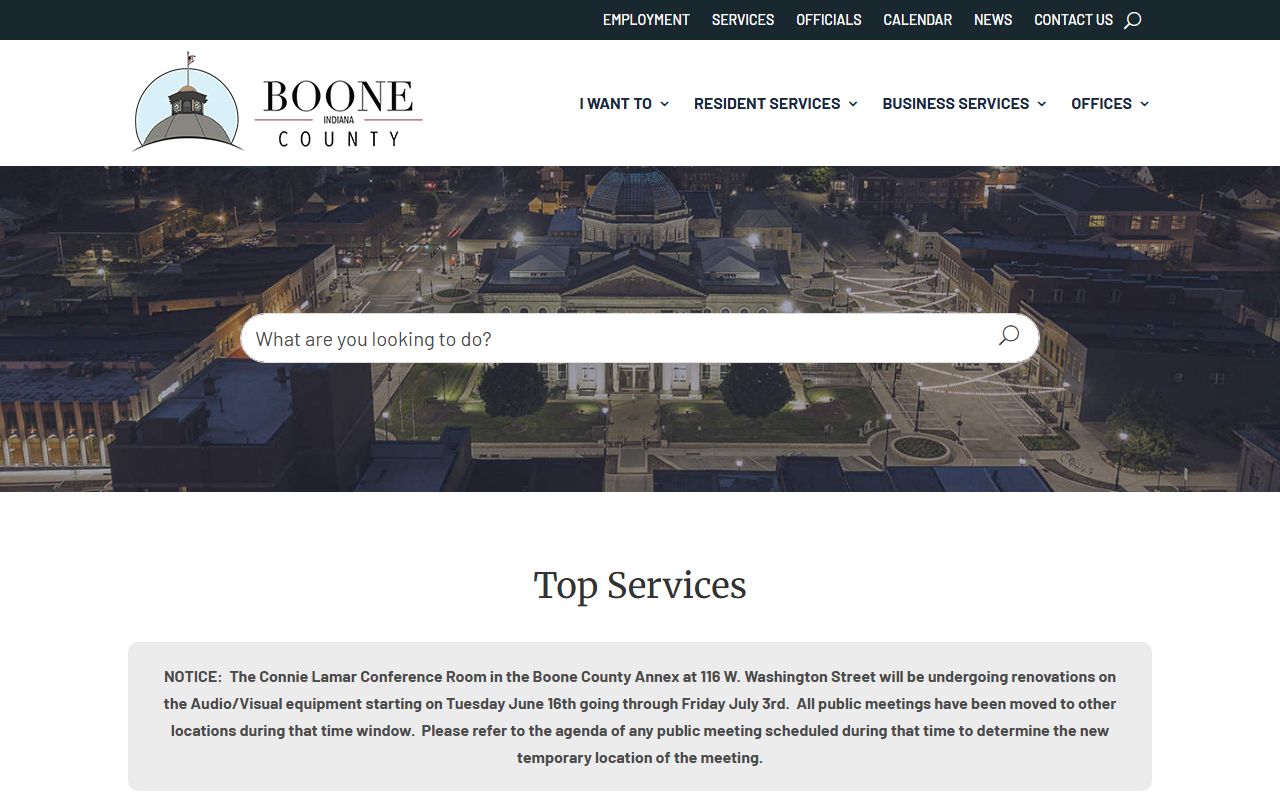
The county homepage matters because court record users often need more than a search result. Payments, jury notices, clerk services, and license tasks can all route through county service links.
Boone County Court Search Fields
MyCase works best when the search starts with the cleanest available field. A cause number is the most direct route. A party search needs enough detail to avoid thousands of statewide matches, and the official help warns that wildcard and sounds-like searches have limits. Boone County court records can also be narrowed by court, status, file date, and case type when those facts are known.
| Field | Type | Required | Use in Boone County |
|---|---|---|---|
| Case number | Text | No | Best for a known Indiana cause number; Boone numbers use county code 06. |
| Citation number | Text | No | Useful for traffic and infraction records when the ticket number is known. |
| Last name and first name | Text | Conditional | Required for most party searches unless searching a business name. |
| Date of birth | Date | Conditional | Can narrow name matches but does not display in public case details. |
| Court | Dropdown | No | Limit to Boone Circuit Court, Superior Court I, Superior Court II, or a city/town court. |
| Status | Dropdown | No | Search all, open, or closed cases. |
| File date | Date range | No | Useful when a filing month or year is known. |
The Indiana Judicial Branch search tips explain case-number, party, attorney, wildcard, court, case-type, status, and file-date filters for MyCase.
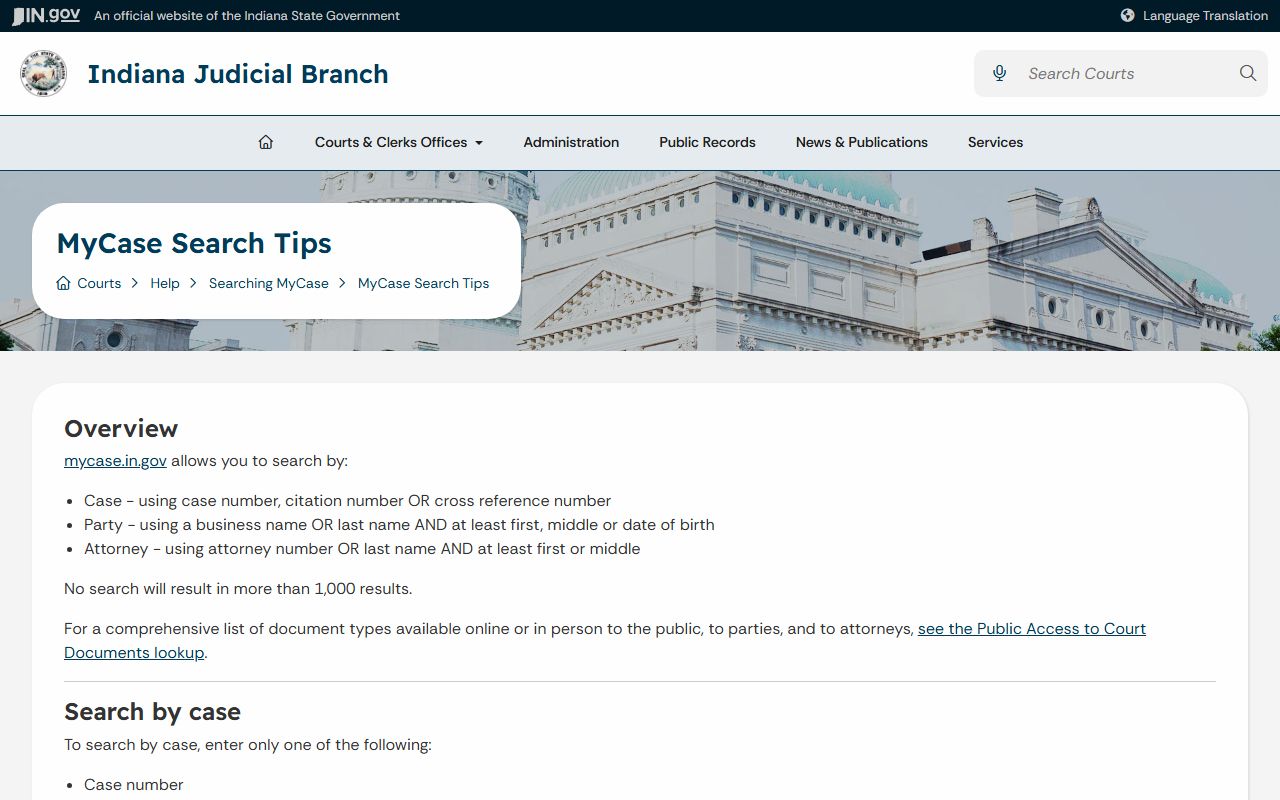
Those official tips are especially useful for Boone County party searches because civil, criminal, probate, traffic, and city/town court matters can share common party names.
Boone County Court System
Boone County does not use a local district court structure. Local trial work is divided among Boone Circuit Court, Boone Superior Court I, and Boone Superior Court II. Indiana circuit courts are constitutional courts of general jurisdiction, while superior courts are statutory courts created by the General Assembly. Boone County's official court pages explain a practical split: Circuit Court has criminal and civil jurisdiction and exclusive juvenile jurisdiction, Superior Court I has criminal, civil, and probate jurisdiction, and Superior Court II has criminal, civil, small claims, and traffic-infraction jurisdiction.
City and town courts may also matter. Boone County identifies limited courts in Zionsville, Jamestown, Whitestown, Lebanon, and Thorntown. Those local courts may handle ordinance violations, infractions, and misdemeanors. Appeals from Boone trial courts move through Indiana appellate courts, with the Indiana Court of Appeals as the ordinary intermediate appellate court.
| Court or Office | Local Role | Record Impact |
|---|---|---|
| Boone Circuit Court | Criminal, civil, extradition, name changes, title cases, and juvenile matters | Juvenile jurisdiction can mean restricted public access. |
| Boone Superior Court I | Criminal, civil, estates, guardianships, and adoptions | Probate records route here, with adoption limits. |
| Boone Superior Court II | Criminal, civil, small claims, and traffic infractions | Small claims and many traffic matters route here. |
| City and town courts | Limited ordinance, infraction, and misdemeanor work | The citation or docket may name a local court. |
| County Clerk | Court filings, copies, costs, fines, judgments, and marriage licenses | Certified copies and nonposted records route to the clerk. |
The Indiana Judicial Branch is the statewide source for court structure, forms, public tools, and court services.
State court resources explain how Boone County records fit into Indiana's broader trial and appellate system.
Boone County Court Clerk
The Boone County Clerk is the core local office for public court records. The clerk maintains pleadings, motions, papers, evidence, rulings, judgments, orders, decrees, fines, court costs, child-support collections, summons work, jury summons work, marriage licenses, and election functions. Lisa Bruder is identified as Clerk of Boone County in the research source, and the clerk's office is the local fallback when a public record is not visible online or a certified copy is required.
The Boone County Clerk page gives the clerk's public office details, hours, contact information, and broad description of court-record duties.
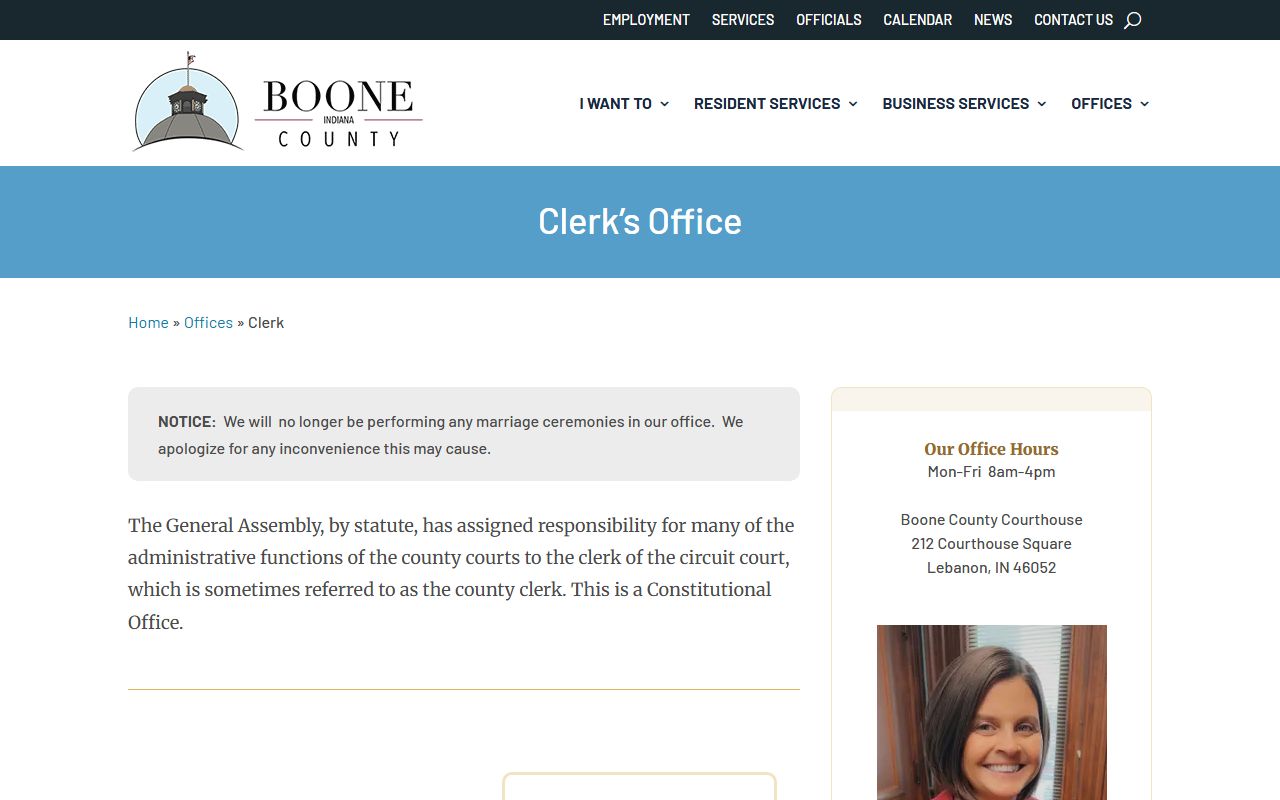
Clerk access is important for Boone County court records because online case data is not the same as a certified court copy.
Boone County Clerk
212 Courthouse Square
Lebanon, IN 46052
765-482-3510
Monday-Friday, 8:00 a.m.-4:00 p.m.
Boone Superior Court II
112 Courthouse Square
Lebanon, IN 46052
765-482-6502
Small claims and traffic-infraction jurisdiction.
Boone County Court Record Types
Boone County court records include civil suits, criminal cases, charges filed after arrest, family and divorce cases, probate matters, traffic infractions, small claims, juvenile matters, protection-order information, judgments, liens tied to court cases, name changes, title cases, and mental health matters. Public access differs by case type. Civil and criminal docket entries are often public. Juvenile, adoption, mental health, protection-order protected-person data, sealed cases, and granted expungements can be restricted.
Criminal records are filed in all three Boone county trial courts under a local rule. Probate records are concentrated in Boone Superior Court I. Small claims and traffic infractions are concentrated in Boone Superior Court II, while city and town courts may also handle infractions and ordinance matters. Divorce cases are court records held through the clerk, not state vital records. A marriage license, by contrast, is issued and recorded by the County Clerk.
- Civil cases: complaints, answers, motions, orders, judgments, and collection filings.
- Criminal cases: charges, hearings, bonds, pleas, dispositions, sentencing, probation, and costs.
- Probate matters: estates, guardianships, trusts, orders, letters, and restricted adoption files.
- Traffic matters: citation number, charge, court date, plea, disposition, fines, costs, and payment status.
- Small claims: notices of claim, service, hearing entries, judgments, garnishments, and satisfaction filings.
Boone County Court Access Rules
Indiana's public access framework has two layers for Boone County court records. The Indiana Access to Public Records Act applies to public agencies in general, while Indiana Supreme Court access rules govern court records in particular. MyCase is the practical public search path, but the Boone County Clerk remains the records custodian for pleadings, motions, judgments, orders, decrees, fines, costs, and certified copies.
Key rules: Indiana Code 5-14-3 supports public inspection and copying unless an exception applies. Indiana Rules on Access to Court Records make court records generally accessible unless excluded by rule, statute, or court order. Indiana Code 35-38-9 controls expungement and sealing of eligible criminal records.
The access-rules page was updated effective July 1, 2026, according to the research source. Rule 4 is the general access rule, while Rule 5 identifies records and information excluded from public access. Protected identifiers, Social Security numbers, financial account numbers, minor data, protected-person information, juvenile records, adoption records, mental health records, and granted expungement records require extra care.
The Indiana court-record access rules are the official source for Boone County public court-record limits.
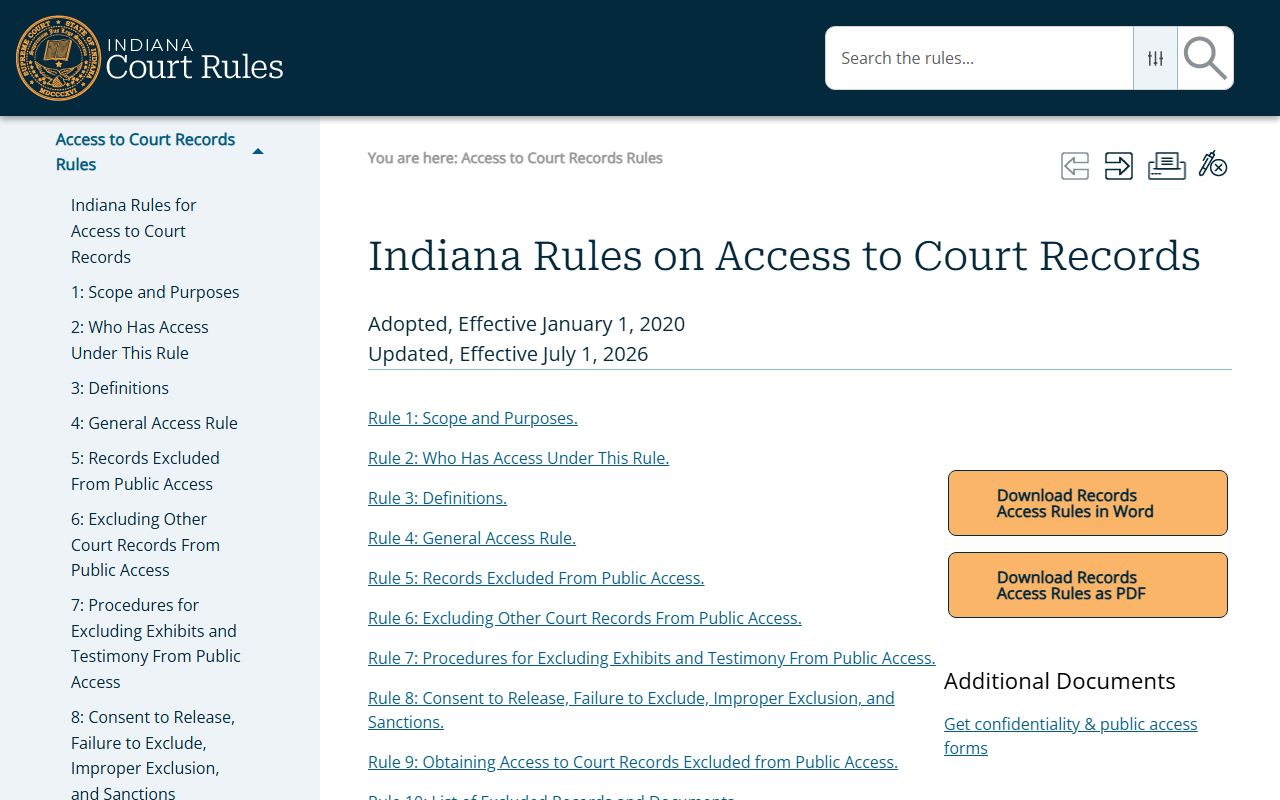
These rules explain why a Boone County docket may be visible while a document, identity field, or entire case remains unavailable to the public.
Restricted Boone County Court Records
Not every Boone County court record is public online. Juvenile delinquency, CHINS, status, termination, and many paternity matters are restricted by Indiana juvenile law. Adoption records are handled through Superior Court I but are generally confidential. Mental health case types have no public online orders or documents in Indiana access tables. Protection-order cases are not found in MyCase because protected-person names and identifying information are excluded from online public access.
Expungement also changes access. Pending or denied expungement petitions may appear in MyCase, but a granted order can remove or restrict public access depending on the type of relief. A person should not assume that a missing Boone County criminal result proves the case never existed. It may be sealed, confidential, expunged, older than the online system, or outside the searched court.
Boone County Criminal Records
Boone County criminal court records begin after charges are filed in court. The Boone County Prosecutor handles felonies, misdemeanors, traffic infractions, juvenile matters, and child-support matters within county jurisdiction. A criminal court file can show charges, probable-cause filings, initial hearing entries, bond orders, motions, plea agreements, disposition, sentencing orders, probation terms, fines, costs, and final judgments. The charge list in MyCase may show citation number, offense date, offense statute, offense degree, original degree, modification, and description.
The Boone County Prosecutor page is the local source for the office that files and prosecutes many Boone County criminal and traffic matters.
Indiana MyCase public search is the court-side lookup for Boone County criminal and traffic cases after filing.
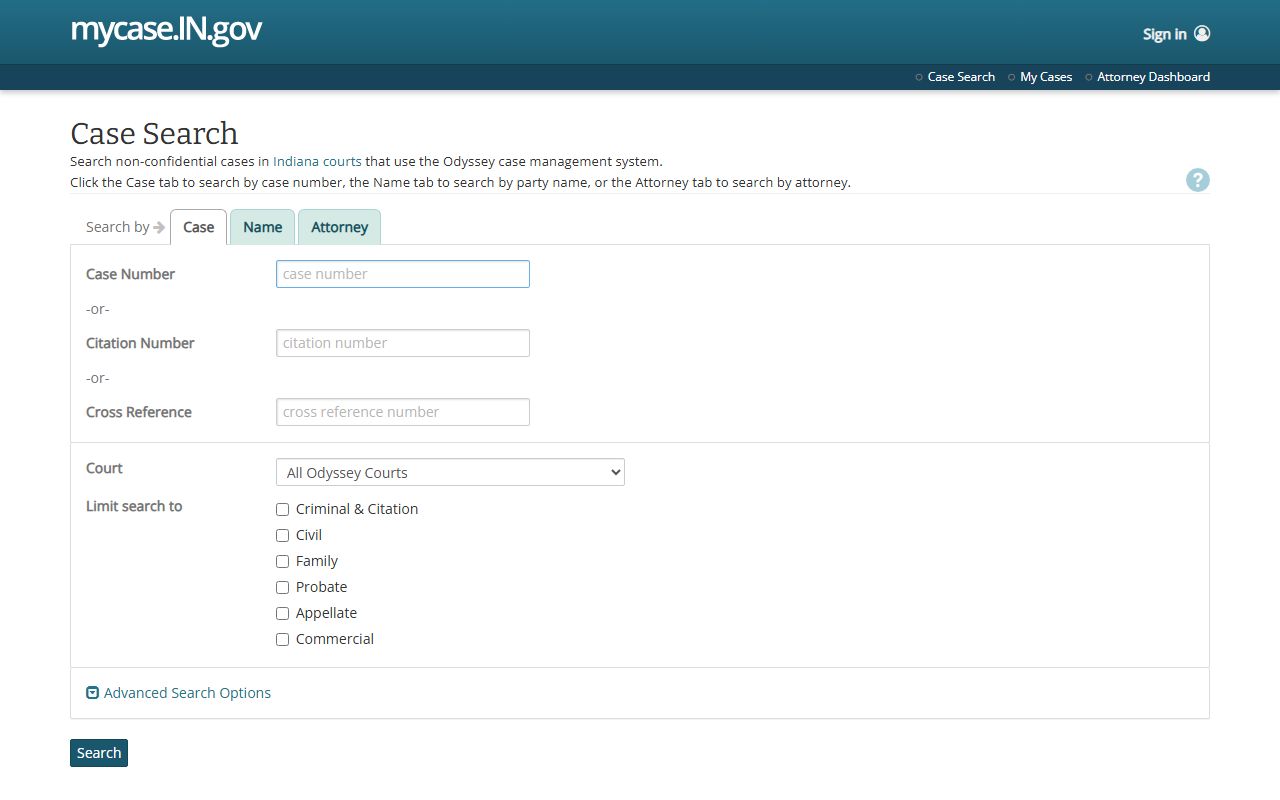
MyCase is where the court side of a Boone County criminal case is searched after filing, even when the first public contact was an arrest or citation.
Traffic and infraction records can involve Boone Superior Court II or a city/town court. Boone's clerk infraction page says traffic and criminal costs may be paid online through Odyssey, a cause number is needed, a service fee is added, and online payment is encouraged where available. The Boone County Prosecutor also offers an Infraction Deferral Program for eligible drivers, and the source warns readers to review deferral information before paying a ticket.
Boone County Jail Records
The Boone County Sheriff's Office operates the jail and links to the official JailTracker public roster. Current county custody is separate from court case records. JailTracker may help locate a person held in Boone County custody, while MyCase is the route for the court date, charge filing, docket, bond events, and case outcome. The sheriff's corrections page also points readers to DOC, sex offender registry, inmate services, money deposits, visitation, mail, and medical information.
The sheriff app is named Boone County Sheriff (IN). App-store listings describe public-safety news, crime reports, tips, and interactive features, but the research did not verify an app-only inmate, warrant, or court-record search. The Boone County Sheriff's Office homepage remains the official law-enforcement starting point.
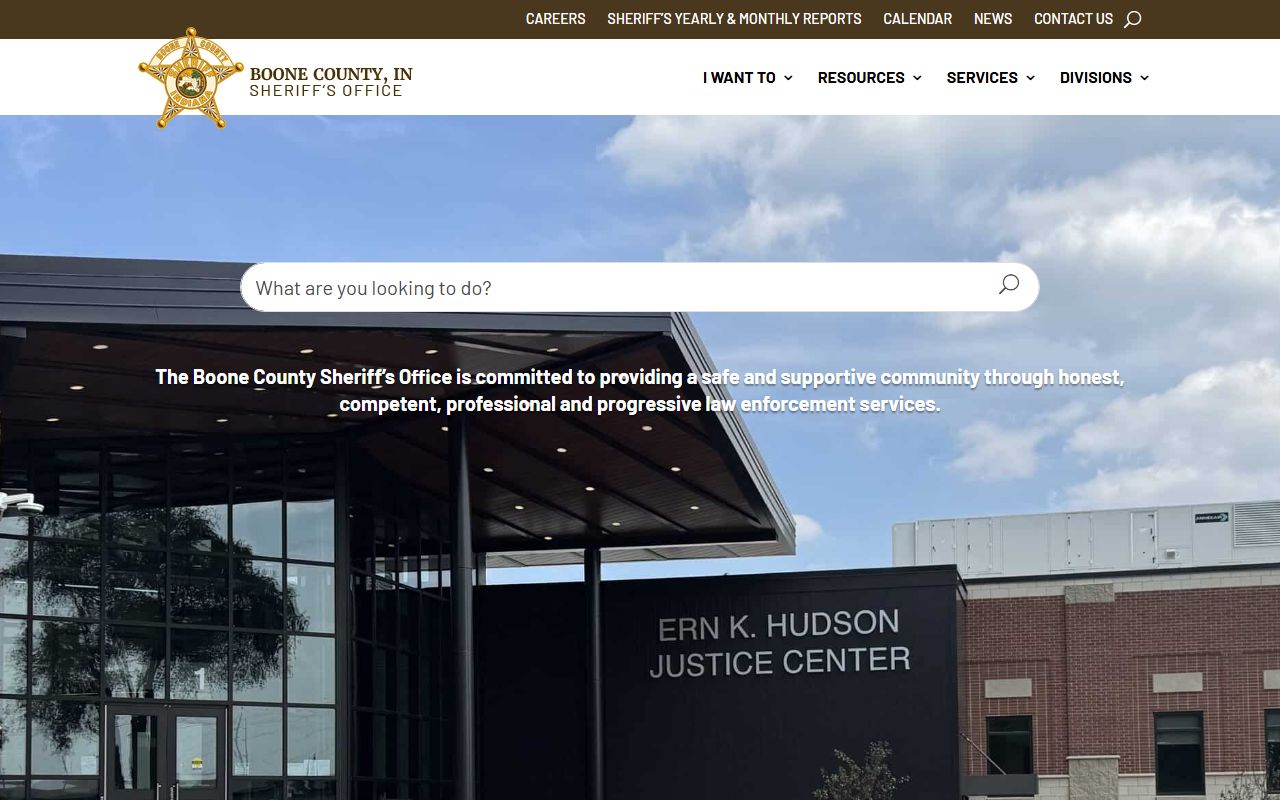
The sheriff source is useful for custody and public-safety channels, but court filings and case outcomes still route through MyCase and the clerk.
Boone County Court Fees
Boone County fee details come from the Clerk fines and court costs page. Fees vary by case type and service. Certified pleadings cost a certification fee plus copy pages, while plain copies and orders have separate per-page prices. The same fee source lists civil filings, small claims, probate filings, adoption filings, infraction costs, criminal costs, support fees, and sheriff service fees.
| Item | Amount or Note |
|---|---|
| Small claims filing, one defendant | $87.00 |
| Civil filing, one defendant | $157.00 except noted categories |
| Dissolution of marriage or legal separation | $177.00 |
| Estate, trust, and guardianship filing | $177.00 |
| Infraction court costs | $135.00 plus fines or late fees |
| Criminal court cost | $185.00 plus court-assessed fees |
| Certified pleadings | $3.00 certification plus $1.00 per page |
| Plain copies | $0.10 per page, not including orders |
| Orders | $1.00 per page |
| Sheriff service of process fee | $28.00 |
Boone County Court Terms
Many Boone County court records use short legal terms. A docket may call the case history a chronological case summary, list a disposition without plain explanation, or show a bond and probation entry in the same event stream. These terms affect how the record should be read.
- Cause number
- Indiana's case number for a court case.
- Chronological Case Summary
- The docket-style event history showing filings, hearings, orders, and outcomes.
- Disposition
- The outcome of a charge or case, such as dismissed, guilty, judgment entered, or closed.
- Information
- A charging document filed by a prosecutor.
- Expungement
- A statutory process that can seal or restrict eligible arrest, charge, juvenile allegation, or conviction records.
Boone County Court History
Boone County was established in 1830 and named after Daniel Boone. Boone Circuit Court began in 1832, before proceedings settled permanently in Lebanon. The first term was held in a home in Jamestown, the next in Thorntown, and the third in Lebanon at the home of A.H. Longley. By 1834, the Circuit Court had moved into the courthouse in downtown Lebanon. Superior Court I was created in 1968, and Superior Court II began as a County Court before becoming a Superior Court in 1986.
The Boone Circuit Court page preserves this local history and explains Circuit Court jurisdiction.
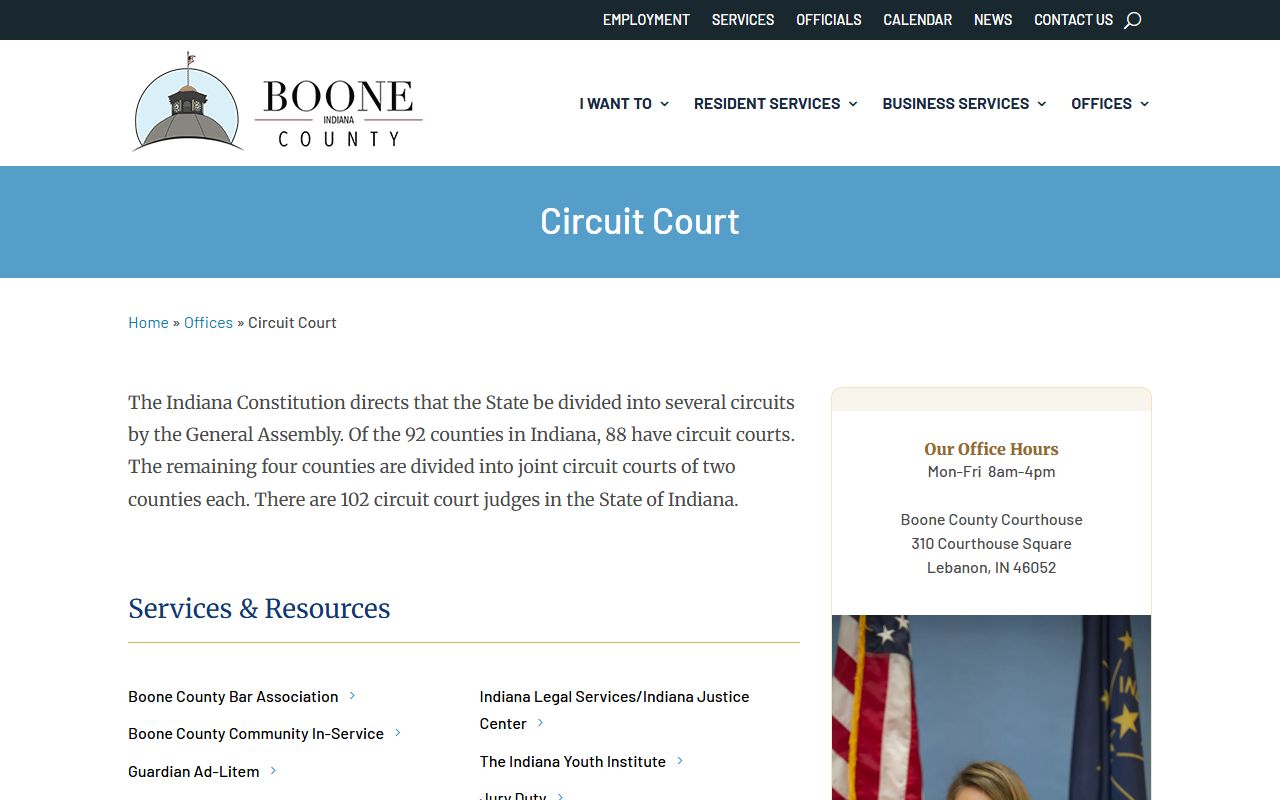
Historical court names can matter when older Boone County records refer to a predecessor court or a court division that has since changed.
The Boone Superior Court II page explains the small-claims and traffic-infraction role now attached to that court.
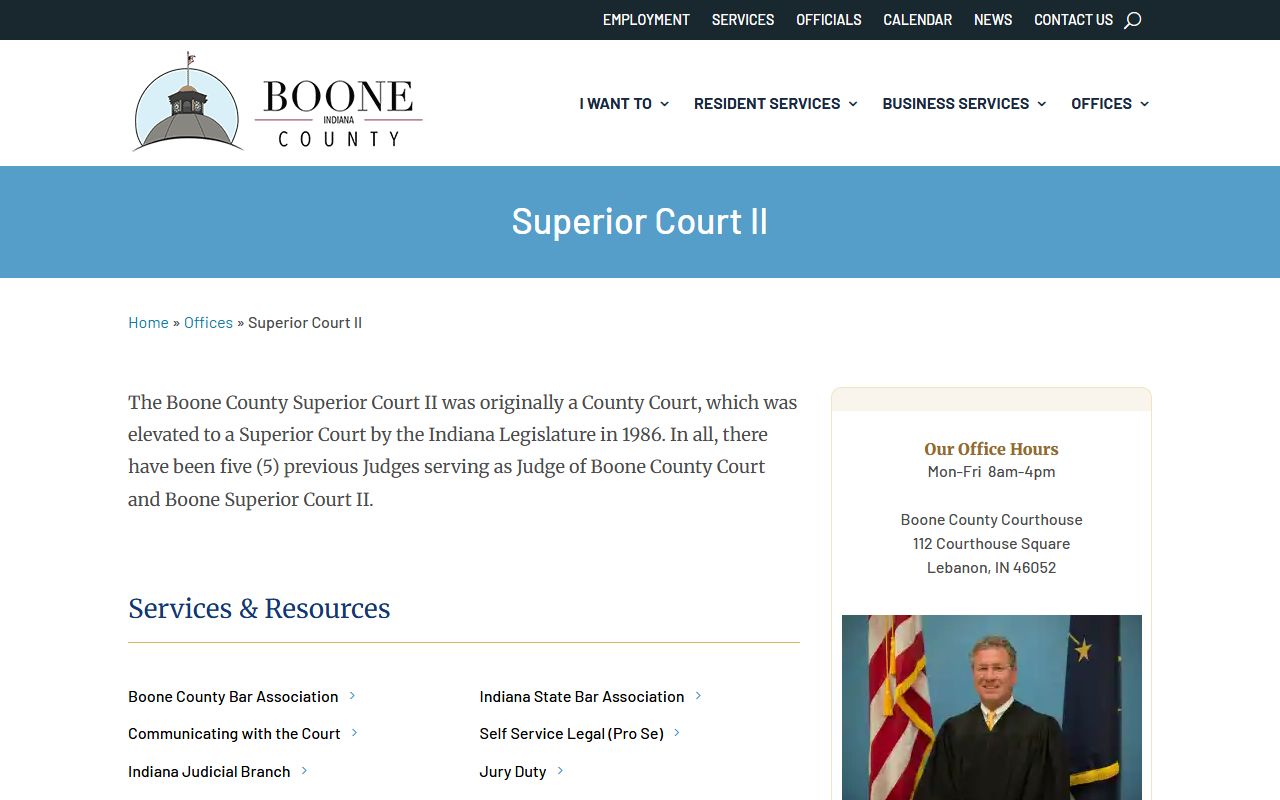
Superior Court II is a key Boone County record source for small claims, traffic infractions, and civil or criminal matters assigned to that court.
Boone County Court FAQ
Can Boone County court records be searched online? Yes. MyCase is the main online search for public, nonconfidential Boone County court records in Odyssey courts. Some documents are not online, and older records may require the clerk.
Which Boone County court handles probate? Boone Superior Court I has exclusive jurisdiction over estates, guardianships, and adoptions. Public probate docket details may appear in MyCase, but adoption and sensitive guardianship records are restricted.
Who gives certified copies? The Boone County Clerk provides certified copies and maintains pleadings, motions, rulings, judgments, orders, decrees, fines, costs, and child-support records for the local courts.
Are protection orders in MyCase? No. Indiana MyCase help states protection-order cases are not found in MyCase because protected-person names and certain identifying information are excluded from online public access.
Does a charge mean a conviction? No. A charge is an accusation filed in court. A conviction requires a guilty plea, verdict, or other court finding that results in guilt.